01 Feb Understanding the True Cost of a Polyaspartic Floor Coating
When considering a new floor, the conversation often starts with price. While the initial polyaspartic floor coating cost may seem higher than alternatives, viewing it merely as an expense is a mistake. A professionally installed polyaspartic system is a long-term investment in your property’s durability, aesthetic value, and long-term protection.
A Long-Term Investment, Not a Short-Term Expense
To truly understand the value of a professional polyaspartic coating, you must look beyond the initial price tag. You aren’t just purchasing a layer of color; you are investing in a complete flooring system engineered with industrial-grade materials and a meticulous installation process designed for longevity.
Unlike a simple coat of paint, this is a sophisticated chemical system engineered to permanently fuse with your concrete, creating a resilient shield.
Our ‘Pristine Process’ is the cornerstone of this investment, ensuring every dollar contributes to a floor that withstands daily life. It begins with industrial-grade surface preparation—the most critical step, which many contractors skip to reduce costs. We utilize heavy-duty diamond grinders to mechanically profile the concrete, creating a porous surface that the coating can penetrate for a bond that will not peel or delaminate.
Beyond the Surface: The Pristine Standard of Quality
Following preparation, we apply only premium, 100% solids materials. This is not a diluted, thin-film product. It creates a substantial, tough barrier that resists moisture, hot tires, chemical spills, and the relentless UV exposure common in our local climate. The result is a floor that not only looks spectacular but is also incredibly easy to clean and maintain, significantly increasing your property value.
That upfront cost reflects this comprehensive, quality-first approach. You are trading a higher initial investment for years of unmatched durability and minimal upkeep. For a homeowner, this means transforming stained, dusty concrete into a bright, clean, and slip-resistant surface that adds tangible value to garages, patios, and commercial spaces.
Ultimately, our goal is to provide a flooring solution that performs consistently for decades. You can learn more about how long different flooring systems last in our guide, but the takeaway is clear: a professionally installed polyaspartic floor is built for the long haul.
Breaking Down the Key Cost Factors
When you receive an estimate for a polyaspartic floor, you’re not just buying material in a bucket. You’re investing in a multi-stage system where every component—from the unseen preparation to the visible topcoat—is engineered for long-term performance and protection.
It all begins with the most critical phase, which has nothing to do with the final shine. It’s what lies beneath.
The Foundation of a Flawless Floor
The single most important factor determining the lifespan of your floor is surface preparation. This is not a simple cleaning; it’s an intensive mechanical process that forges a permanent, unbreakable bond between the concrete and the coating.
We employ industrial-grade diamond grinders to profile the concrete, opening its pores to create a tenacious, anchor-like surface. Skipping this step leaves the coating sitting on a weak layer, destined to peel.
The current state of your concrete is also a major part of the equation. A professional installation means meticulously repairing all existing damage first:
- Crack Repair: We chase and fill every crack, from hairline fractures to larger structural ones, preventing them from telegraphing through your new floor.
- Spalling and Pitting Correction: Any areas where the concrete is flaking, chipping, or pitted are filled and smoothed. A perfect finish demands a perfect canvas.
Addressing these issues is not optional for a floor built to last. It provides the coating system with a stable foundation to bond to, preventing future failures and protecting your investment from day one.
Material Quality and Thickness
Let’s be clear: not all polyaspartic coatings are created equal. A significant cost driver is the quality of the materials. We exclusively use 100% solids, industrial-grade polyaspartic and epoxy products.
What does this mean? It means there are no cheap solvents or fillers that evaporate as the floor cures, leaving behind a thin, weak film. We do not skimp on our epoxy coats; what we pour is what you get—a thick, robust layer of protection. This is a crucial distinction that directly impacts the floor’s resistance to impacts, abrasions, and chemical spills. You can dive deeper into why coating thickness is so important in our detailed guide.
The global demand for these high-performance systems tells the story. The polyaspartic coatings market is projected to hit US$ 380.4 million by 2030, a boom driven by homeowners and businesses who understand that a higher initial investment saves significantly in long-term maintenance and replacement costs. You can learn more about these market trends and the growth of polyaspartic coatings.
This infographic shows exactly how that investment translates into real-world benefits for your property.
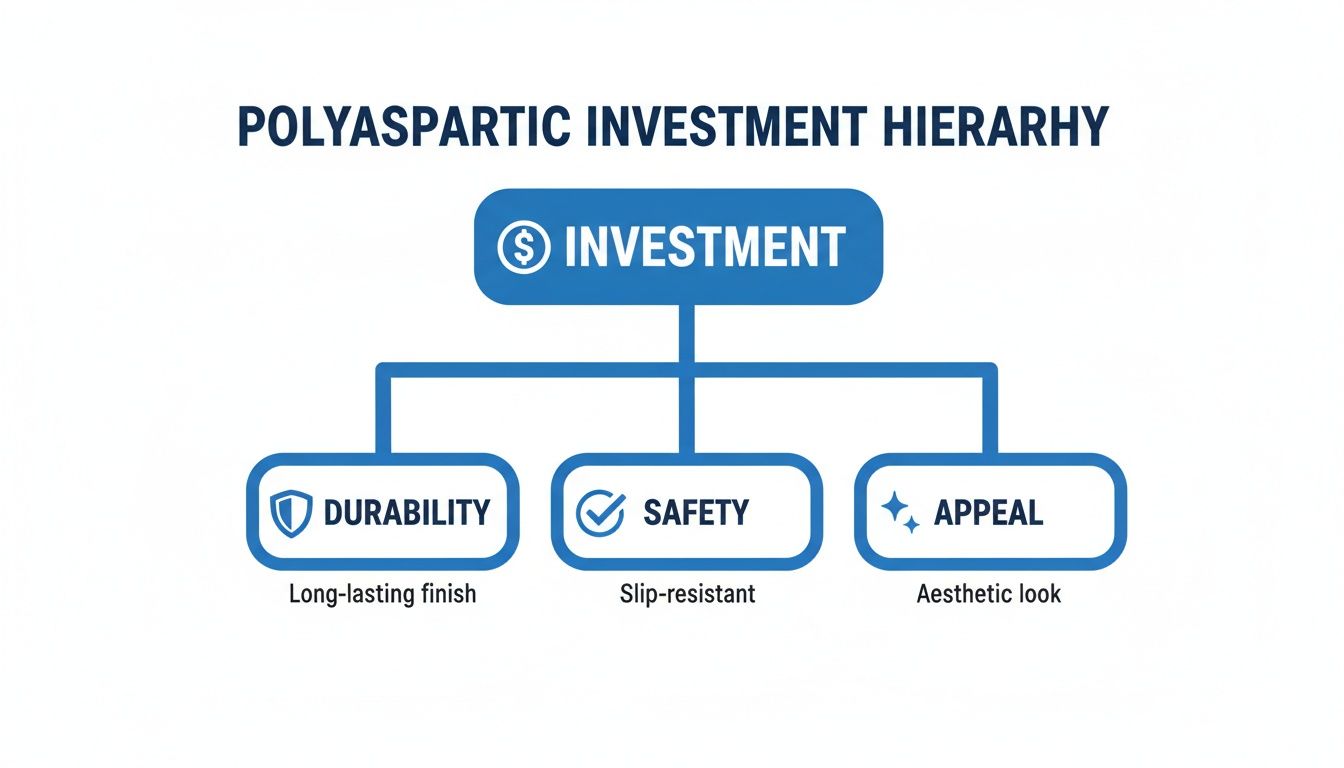
As you can see, your investment directly fuels the floor’s durability, safety, and visual appeal—the cornerstones of a high-value flooring system that enhances your property.
A proper polyaspartic installation isn’t a single line item. It’s a combination of materials, labor, and expertise. To give you a clearer picture, here’s how the costs typically break down.
| Cost Component | Description | Impact on Overall Cost |
|---|---|---|
| Surface Preparation | Diamond grinding the concrete, cleaning, and profiling the surface for maximum adhesion. This is the most labor-intensive step. | High |
| Concrete Repair | Meticulously fixing all cracks, spalling, and pitting to create a smooth, stable foundation for the coating system. | Moderate |
| Materials | The cost of industrial-grade, 100% solids epoxy (for the base coat) and polyaspartic (for the topcoat), plus decorative flakes or quartz. | High |
| Labor | The wages for a skilled, experienced installation crew. Professional application is key to a flawless, long-lasting finish. | High |
| Finish & Customization | The choice of full-flake, quartz, or solid color systems affects material usage and labor time. | Moderate |
| Moisture Mitigation | If the concrete has high moisture content, a specialized vapor barrier primer is required to prevent bubbling and peeling. | Moderate |
Understanding these components helps clarify that you’re not just paying for a floor—you’re investing in a durable, long-lasting solution tailored to your space.
Aesthetic Choices and Finishes
Finally, your design choices will influence the final cost. Different systems require varying amounts of material and labor, but each offers unique aesthetic and functional benefits.
Maintenance Tip: Regardless of the finish you choose, maintaining its appearance is simple. Regular sweeping and occasional mopping with a pH-neutral cleaner are all it takes to preserve the high-gloss look for years.
Some of the most popular systems include:
- Full-Flake Broadcast: We broadcast decorative vinyl chips across the entire surface to rejection. This creates a beautiful, textured, multi-toned look that excels at hiding dirt and enhances slip resistance.
- Quartz System: This system uses colored quartz sand instead of vinyl flakes. The result is an incredibly durable, high-traction surface ideal for garages, workshops, and demanding commercial environments.
- Solid Color Systems: For a clean, modern, and seamless aesthetic, a solid color polyaspartic floor provides a highly reflective finish that brightens any space.
Each option is a component of the total polyaspartic floor coating cost, contributing to a floor that is not only built for extreme durability but is also customized to your personal style.
When evaluating floor coating estimates, it’s easy to focus solely on the upfront price. However, the true story is not the initial cost but the total cost of ownership over the next decade and beyond.
Comparing polyaspartic and epoxy coatings on price alone is like comparing vehicles based only on sticker price, ignoring fuel economy or repair costs. To understand the genuine value, you must examine the chemistry and how each system performs in the real world.
The most significant chemical advantage comes down to one factor: sunlight. Epoxy floors have poor UV stability. Simply put, they cannot withstand the sun. Whether it’s direct sunlight on a patio or ambient light in your garage, epoxy will eventually yellow and fade. It is a matter of when, not if.
Polyaspartic coatings, by contrast, are chemically different. Formulated with aliphatic compounds, they are 100% UV stable. This means they will never yellow or fade due to sun exposure. The color you select is the color that endures.
Durability Under Pressure
Aesthetics are important, but performance is paramount. This is where daily use separates a good coating from a great one.
While both systems are strong, polyaspartic coatings possess a distinct advantage in flexibility and abrasion resistance. Think of it this way: epoxy is hard and brittle, while polyaspartic is tough and resilient, like the rubber on a high-performance tire. This inherent elasticity allows it to absorb impacts from dropped tools and resist scratches from heavy equipment.
Over time, this translates to fewer repairs and less maintenance. A brittle epoxy floor is more prone to chipping and cracking under stress, whereas a polyaspartic floor maintains its resilience, offering direct savings in long-term costs and hassle.
The One-Day Installation Advantage
This is perhaps the most compelling practical benefit for homeowners. Time is a valuable commodity, and our process saves you a significant amount of it. Because polyaspartic coatings cure rapidly, our professional crews can execute the entire ‘Pristine Process’—from diamond grinding to the final topcoat—in a single day.
Why This Matters: A one-day installation dramatically reduces labor costs and minimizes disruption to your life. You won’t be parking on the street or closing your business for a week. You can typically walk on your new floor within 24 hours and park vehicles on it in as little as 48-72 hours. An epoxy installation, however, can be a three- to five-day process, leading to more inconvenience and higher labor expenses.
This rapid return to service is a game-changer for anyone who cannot afford to have their space out of commission. You can see just how well these coatings hold up in tough outdoor spots by checking out our guide to coatings for driveways.
When you analyze the total cost of ownership—factoring in UV stability, long-term durability, and installation speed—the conclusion is clear. The slightly higher upfront polyaspartic floor coating cost isn’t an expense; it’s a smarter, more valuable investment.
How Meticulous Prep Delivers a Better Return on Investment
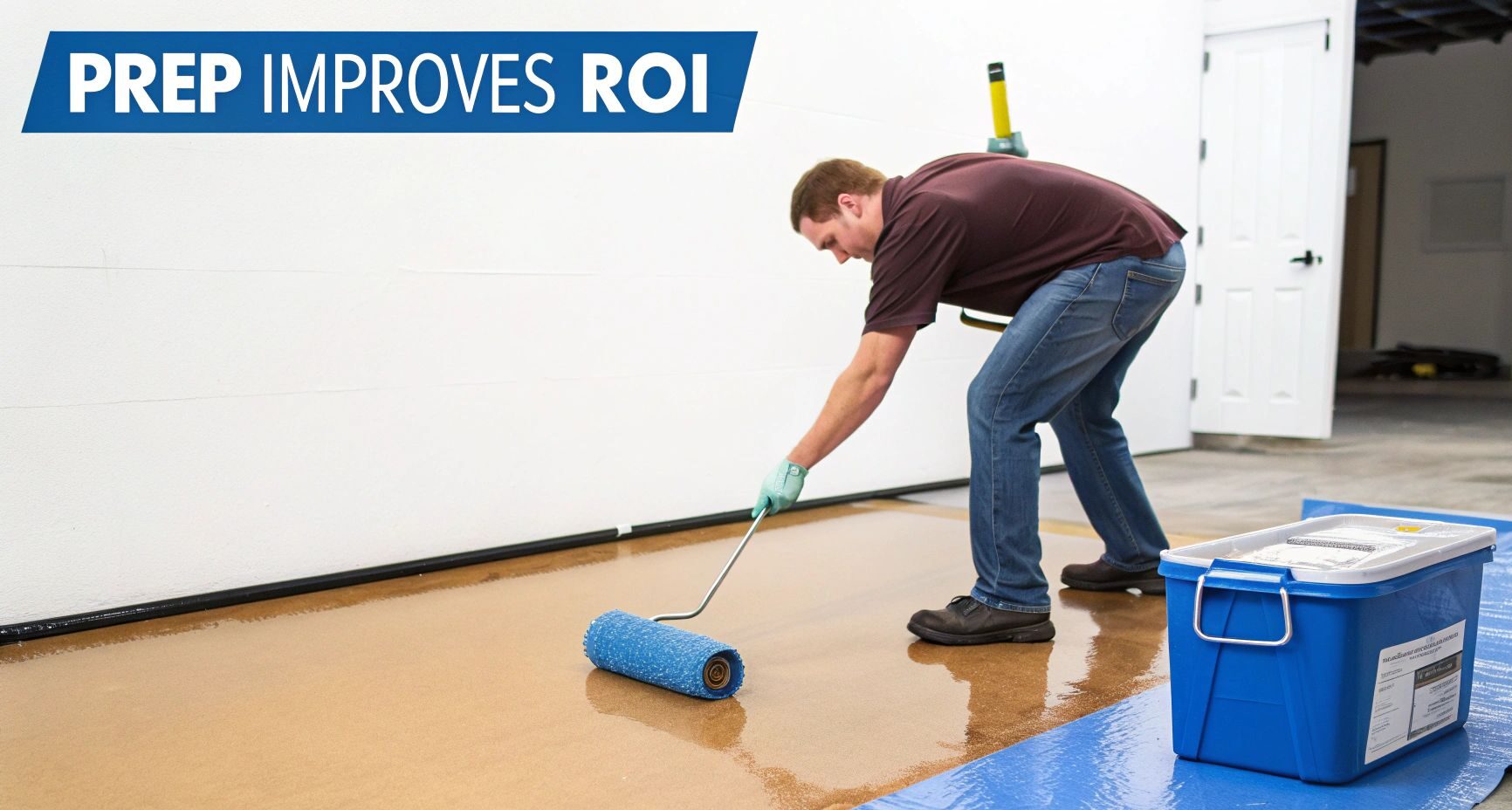
A high-performance floor coating isn’t just poured over concrete; it’s chemically fused to it. The quality of that bond determines everything—from how long the floor lasts to how well it shrugs off damage. This is where the ‘Pristine Process’ takes what might seem like a higher initial investment and turns it into a far better long-term return.
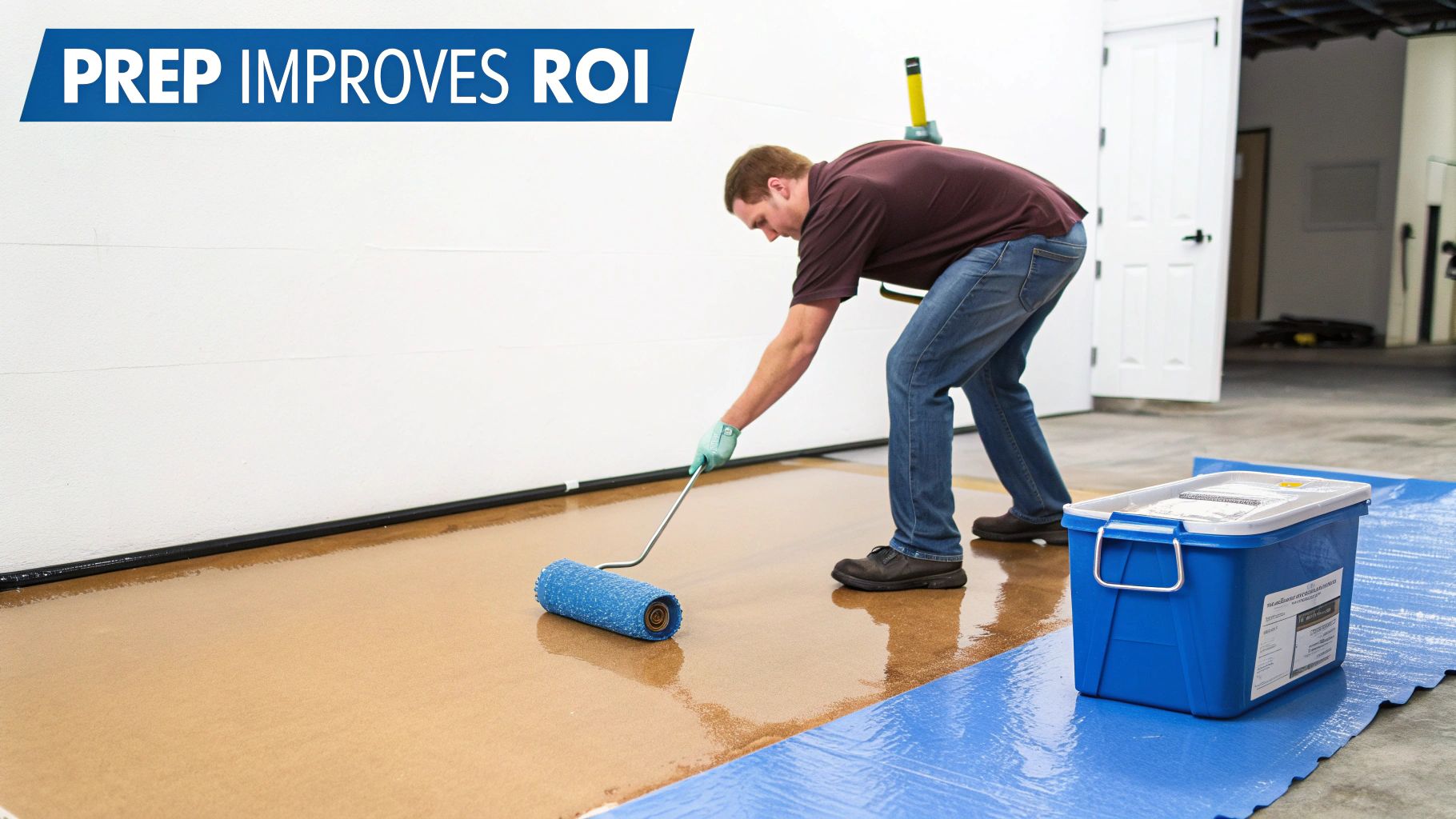
Our methodical approach begins long before any coating is mixed. It starts with aggressive surface preparation, including industrial diamond grinding and painstaking concrete repair. This isn’t just “cleaning” the floor. We are mechanically creating a porous, anchor-like profile for the coating to grab onto permanently. In our experience, skipping this step is the #1 cause of floor failures like peeling and delamination.
A coating is only as strong as the surface it’s bonded to. By investing in meticulous preparation, you’re not just buying a floor—you’re buying the peace of mind that comes with a permanent, worry-free solution.
This foundational work is non-negotiable. It ensures every layer we apply performs exactly as engineered, safeguarding your investment against the all-too-common problems you see in garages and on patios.
Combating Common Concrete Failures
A professionally installed system is designed to solve problems, not just cover them up. The specific, technical details of our multi-layer application are engineered to directly combat the most frequent issues homeowners face, delivering real-world advantages you can see and feel.
- Hot-Tire Pickup: We’ve all seen it—black marks peeling a coating right off the floor. Our moisture-blocking, 100% solids epoxy base coat creates an unbreakable bond that stops hot tires from lifting the coating.
- Chemical Stains: The non-porous polyaspartic topcoat is chemically inert. That means oil, gasoline, and other garage chemicals wipe away clean without leaving a nasty, permanent stain.
- Moisture Damage: Many concrete slabs naturally emit moisture vapor, which is a death sentence for lesser coatings, causing bubbles and peeling. Our system is engineered to block this transmission, protecting the bond from the inside out.
- UV Fading: Our local climate’s UV exposure is relentless. Our aliphatic polyaspartic topcoats are 100% UV stable, guaranteeing your floor’s color and gloss won’t yellow or fade over time—even with the garage door open all day.
This technical excellence translates directly into higher property value and drastically lower maintenance. You’ll spend less time and money on cleaning and future repairs, and more time enjoying a clean, safe, and beautiful space.
From Technical Specs to Everyday Benefits
At the end of the day, the goal of the ‘Pristine Process’ is to deliver a floor that genuinely enhances your lifestyle. The meticulous prep and superior materials create a surface with practical, everyday advantages.
The textured finish from our full-flake systems offers fantastic slip resistance, which is a huge safety boost for your family in wet conditions. The seamless, non-porous surface is also incredibly easy to clean; spills and dirt can be wiped up in seconds. For garages, patios, and commercial spaces, this means a brighter, safer, and more functional environment that adds real, lasting value.
Homeowner’s Concrete Evaluation Checklist
Before getting an estimate, assess your concrete. Identifying these common issues helps you understand the necessary prep work for a lasting finish.
- Look for Cracks: Are there thin hairline cracks, or are they wider and more structural?
- Check for Spalling: Do you see any areas where the surface is pitting, flaking, or chipping? This indicates weak concrete.
- Inspect for Moisture: Is there any white, powdery residue (efflorescence)? This can be a red flag for moisture issues.
- Note Previous Coatings: Is there an old, failing DIY coating that must be completely ground off?
Answering these questions provides a clearer picture of your floor’s condition and underscores why a professional evaluation is essential for an accurate estimate.
Your Pre-Installation Concrete Health Checklist
Before you can even start thinking about the polyaspartic floor coating cost, you need to play detective with your concrete. Why? Because a beautiful new coating is only as good as the slab it’s sitting on. Think of it like painting a rusty car—if you don’t deal with the rust first, that shiny new paint job won’t last a season.
This quick walk-through will help you understand what a professional installer looks for. It’s the first, non-negotiable step to getting a floor that doesn’t just look good on day one, but for years to come.
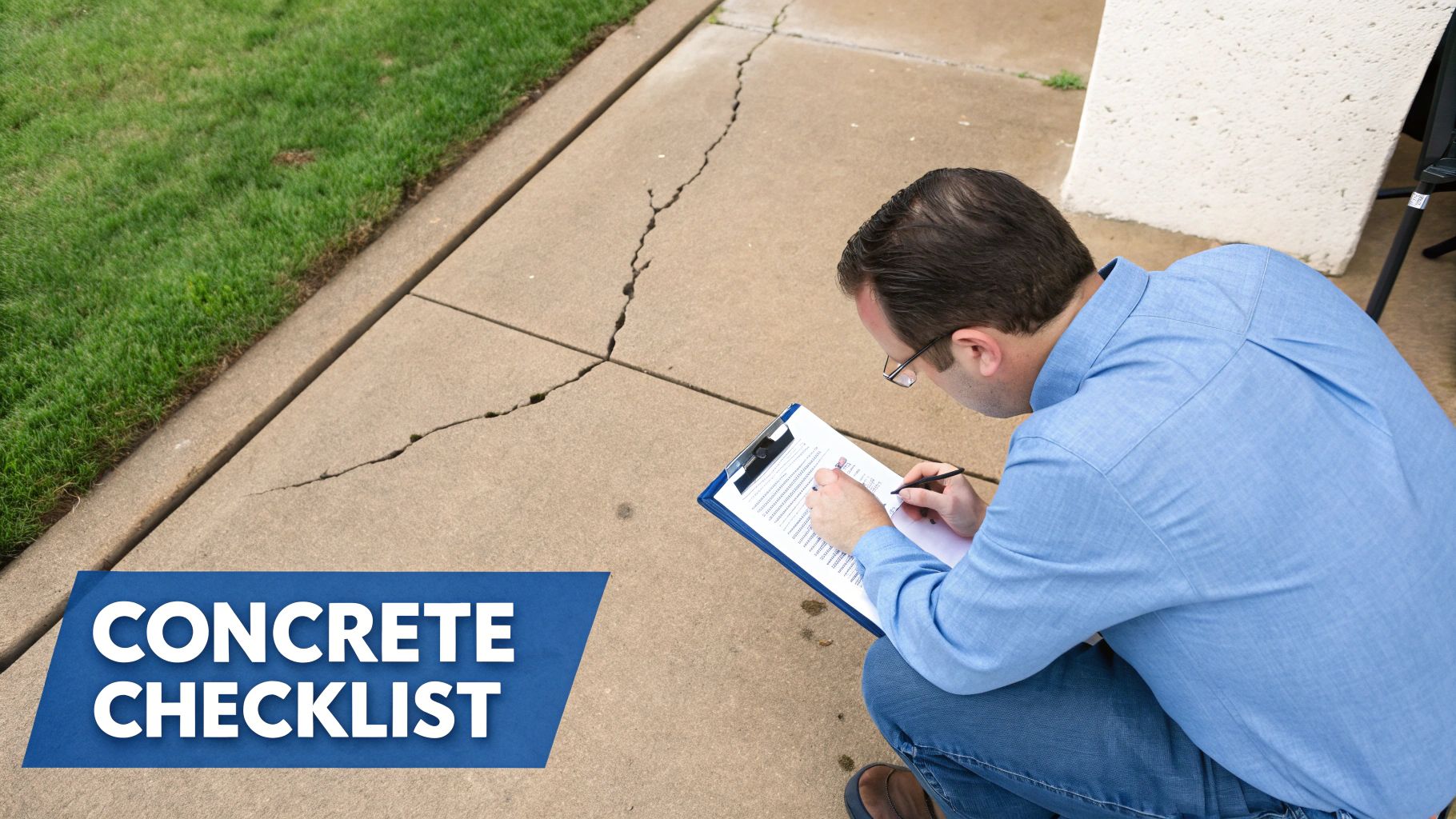
Use this simple checklist to give your floor a once-over. Spotting these common issues ahead of time will help you understand exactly what goes into the prep work needed for a flawless finish.
Step 1: Identify Cracks and Surface Damage
Take a slow, deliberate walk across the entire floor. Get up close and personal with it. You’re looking for cracks and any other signs of wear and tear.
- Hairline Cracks: These are those tiny, spiderweb-like cracks you might barely notice. They seem small, but they absolutely must be chased (opened up) and filled, or they’ll eventually ghost through your new coating.
- Structural Cracks: If you see cracks wider than a credit card, you’re likely looking at a bigger issue, possibly with the slab itself. These need serious attention to make sure the foundation for your new floor is stable.
- Spalling: See any spots where the surface is flaking, pitting, or chipping away? That’s called spalling. It’s a sign of a weak top layer that has to be ground off to get down to solid, healthy concrete.
Step 2: Check for Signs of Moisture
Moisture pushing up through concrete is the number one killer of floor coatings. Period. Luckily, your floor will often give you clues if there’s a problem hiding beneath the surface.
Be on the lookout for efflorescence—a white, chalky powder that looks like a salty residue. This happens when moisture travels up through the slab, dissolves salts inside the concrete, and leaves them behind when it evaporates. If you see this, it’s a red flag. It tells a professional that a special moisture-mitigating base coat is absolutely essential to prevent the new coating from bubbling or peeling off down the road.
Why a Professional Assessment Matters: While this checklist helps you spot the obvious, a true pro doesn’t guess. We use specialized meters to measure the moisture content and hardness of your concrete. This data-driven approach ensures we use the right prep methods and the right products for your specific floor, guaranteeing a bond that lasts.
Doing this quick inspection yourself gives you a solid baseline. It helps you understand the “why” behind the prep work and costs you’ll see on a quote. It shows that the real value isn’t just in the glossy topcoat you see, but in the meticulous foundation work that makes a pristine floor possible.
Still Have Questions? We’ve Got Answers
Understanding the investment is crucial, and it’s natural to have questions. This is a significant upgrade to your property, and clarity is key.
Here are straightforward answers to some of the most common concerns we hear from homeowners.
How long does the installation take?
This is a major advantage of the polyaspartic system’s advanced chemistry. Due to its rapid curing properties, our expert crews can complete the entire ‘Pristine Process’—from heavy-duty diamond grinding and concrete repair to the final protective topcoat—in just one day. This minimizes disruption, allowing you to walk on your new floor within 24 hours and return vehicles to your garage in as little as 48-72 hours.
Can it be applied to damaged or cracked concrete?
Yes, and proper repair is a non-negotiable part of our process. A coating is only as strong as its foundation. We begin by grinding the entire surface to create a clean, porous profile. Then, our technicians meticulously repair every crack, pit, and spall. This creates a solid, stable substrate, ensuring a permanent mechanical bond and a seamless, durable finish that protects the concrete itself.
What is the maintenance like?
You’ll appreciate the simplicity. Polyaspartic floors are exceptionally easy to maintain. The non-porous, chemically resistant topcoat acts as an impenetrable shield against moisture, automotive fluids, and spills.
Maintenance Tip: For daily upkeep, a quick pass with a dust mop is sufficient. For a deeper clean, simply use a mop with a pH-neutral cleaner and water. No harsh chemicals or special waxes are ever needed to maintain its pristine appearance.
Are Polyaspartic Garage Floors Slippery?
While they have a high-gloss finish, they are engineered for safety. During installation, we broadcast a full layer of decorative vinyl flakes or quartz aggregate across the wet base coat. These elements become embedded in the clear polyaspartic topcoat, creating a subtle, uniform texture across the entire floor. This texture provides excellent slip resistance, making the surface safe even when wet—perfect for garages, patios, walkways, and commercial spaces.
Ready to swap that stained, cracked concrete for a surface that’s durable, beautiful, and a cinch to clean? The pros at Pristine Epoxy Floor Coatings are here to deliver a flawless, lasting solution, all backed by our solid 10-year workmanship warranty. Get in touch today for a free, no-pressure consultation.
Enhanced by Outrank app