07 Mar Best Flooring for High-Traffic Areas: A Guide to Durability and Value
When you’re searching for the best flooring for high traffic areas, you quickly realize you need more than just a floor. You need a complete system engineered for long-term protection. This is where seamless resinous coatings like Polyaspartic and Epoxy systems excel—they aren’t just a covering but an industrial-grade solution built to protect concrete in the toughest environments. For garages, commercial spaces, and busy patios, these coatings deliver the durability, easy maintenance, and aesthetic value that significantly increases property value.
Your Guide to Flooring for High-Traffic Environments
Property owners understand the challenge: finding a floor that handles constant foot traffic, rolling tool carts, or even heavy vehicles, all while shrugging off spills and looking pristine. High-traffic areas are battlegrounds where abrasion, impacts, and daily wear are relentless. This guide provides an authoritative look at top-tier flooring systems, helping you choose based on long-term performance and value, not just a temporary finish.
What Makes a Floor “High-Traffic”?
Consider the intense demands placed on a garage floor subjected to hot tires and UV exposure, or a commercial patio enduring constant temperature swings. A truly durable floor does more than just look good; it must protect the concrete slab underneath while providing a safe, easy-to-clean surface day in and day out. It’s about moving beyond temporary fixes to a permanent solution that enhances your property’s value and utility.
This is precisely where professionally installed resinous coatings demonstrate their superiority. Unlike tile, which has porous grout lines that crack and stain, or vinyl that can gouge and tear, a seamless coating creates a single, non-porous shield.
The Pristine Standard: The secret to a floor that provides decades of protection isn’t the material alone—it’s the meticulous surface preparation. A truly expert installation is a science. Our Pristine Process begins by preparing the concrete to create an unbreakable mechanical bond, which is what separates a floor that fails in a year from one that performs for a lifetime.
Comparing Epoxy and Polyaspartic Coatings
Choosing the right system means understanding the chemical advantages of the key players. While “epoxy” is a common term, our advanced systems leverage both Epoxy and Polyaspartic materials for specific, high-performance roles.
| Feature | 100% Solids Epoxy (Basecoat) | Polyaspartic (Topcoat) |
|---|---|---|
| Primary Role | The thick, foundational moisture barrier | The protective, high-endurance finish |
| Thickness | Builds thick to level imperfections & add strength | Applies as a thin, incredibly durable layer |
| Cure Time | Slower cure (8-12 hours) for deep bonding | Fast cure (2-4 hours) for a rapid return to service |
| UV Resistance | Will “amber” or yellow with UV exposure | 100% UV Stable—guaranteed not to yellow |
| Durability | Rigid and high-strength | More flexible and scratch-resistant |
We don’t see it as an “either/or” choice. The most durable, long-lasting floor is a hybrid system that leverages the strengths of both. We never skimp on materials, installing a thick, moisture-blocking epoxy basecoat for strength and adhesion, then finishing with a crystal-clear, UV-stable polyaspartic topcoat. This combination delivers world-class durability, chemical resistance, and a finish engineered for decades of real-world use—often in a 1-day installation.
What High-Traffic Flooring Truly Needs to Endure
When selecting a floor for a high-traffic area, it’s easy to focus on aesthetics. But the true test of value is what that floor can withstand daily. Whether it’s a home garage, patio, or a busy commercial space, your floor is on the front lines, and you need a system built for the fight. Investing in a professional-grade coating is an investment in long-term protection.

The number one enemy? Abrasion. This isn’t just footsteps. It’s the constant grinding from heavy carts, the scuff of tires turning in a tight space, or the scrape of dropped tools. A cheap coating will wear thin in no time, leaving your concrete exposed and vulnerable.
Next is impact resistance. A heavy wrench dropped in a workshop or a pallet slammed down in a warehouse can easily chip bare concrete. A proper flooring system absorbs that force without fracturing, keeping the surface whole and the underlying slab protected.
The Unseen Enemies: Chemical and Environmental Stress
It’s not just physical abuse. Floors face a constant barrage of chemical and environmental threats. Spills are a fact of life—oil, gas, cleaning solutions, you name it. On unprotected concrete, these liquids seep in, leaving ugly stains and slowly degrading the slab itself.
A truly durable floor must be non-porous and moisture-resistant. It creates a monolithic, seamless barrier that prevents chemicals from ever reaching the concrete, making cleanup simple and protecting your investment from long-term damage.
Environmental factors, especially in our local climate, are just as damaging. Sunlight streaming through windows can cause lesser coatings to turn yellow and brittle. A professional-grade polyaspartic system is engineered to be 100% UV stable, so it won’t fade or discolor, and it’s built to withstand temperature swings without compromising its integrity.
The demand for this kind of resilience is skyrocketing. For spaces like garages and warehouses, epoxy flooring has become the go-to for its sheer toughness, often lasting 10-20 years with very little upkeep. This trend is a major factor in the global flooring market, which is projected to hit USD 510.7 billion by 2028. It’s driven by commercial zones where foot traffic can top 1,000 steps per square meter every single day. For context, professionally installed epoxy can handle impacts up to 10,000 psi and shrugs off common oils and cleaners. You can explore more data on the growing flooring market to see these trends firsthand.
Why Expert Surface Preparation Is Everything
Here’s the hard truth: the single most important factor in a floor coating’s lifespan is surface prep. A coating is only as good as its bond to the concrete. Just rolling a coat of paint over a dirty, unprepared floor is a recipe for disaster. I guarantee it will peel within months.
The only right way to do it is with mechanical grinding. Our Pristine Process uses industrial diamond grinders to strip away contaminants and create a perfectly porous texture, or “profile.” This gives the base coat something to bite into, creating a permanent bond. It’s the non-negotiable foundation for a floor that’s truly built to last.
Homeowner’s Concrete Evaluation Checklist
Before you consider a coating, a quick inspection can identify issues that need professional attention first.
- Moisture Check: Tape a 2×2 foot plastic square down to the floor. Leave it for 24 hours. If you see condensation on the underside when you pull it up, you have a moisture problem that requires a specialized vapor barrier.
- Crack Inspection: Look for hairline cracks and larger structural fissures. These need to be professionally repaired before coating, or they’ll just show right through the new floor.
- Previous Coatings: Do you see any peeling paint or failing sealers? All of that old material must be completely ground off. A new system can’t stick to a failing one.
Comparing the Top Flooring Choices for High-Traffic Zones
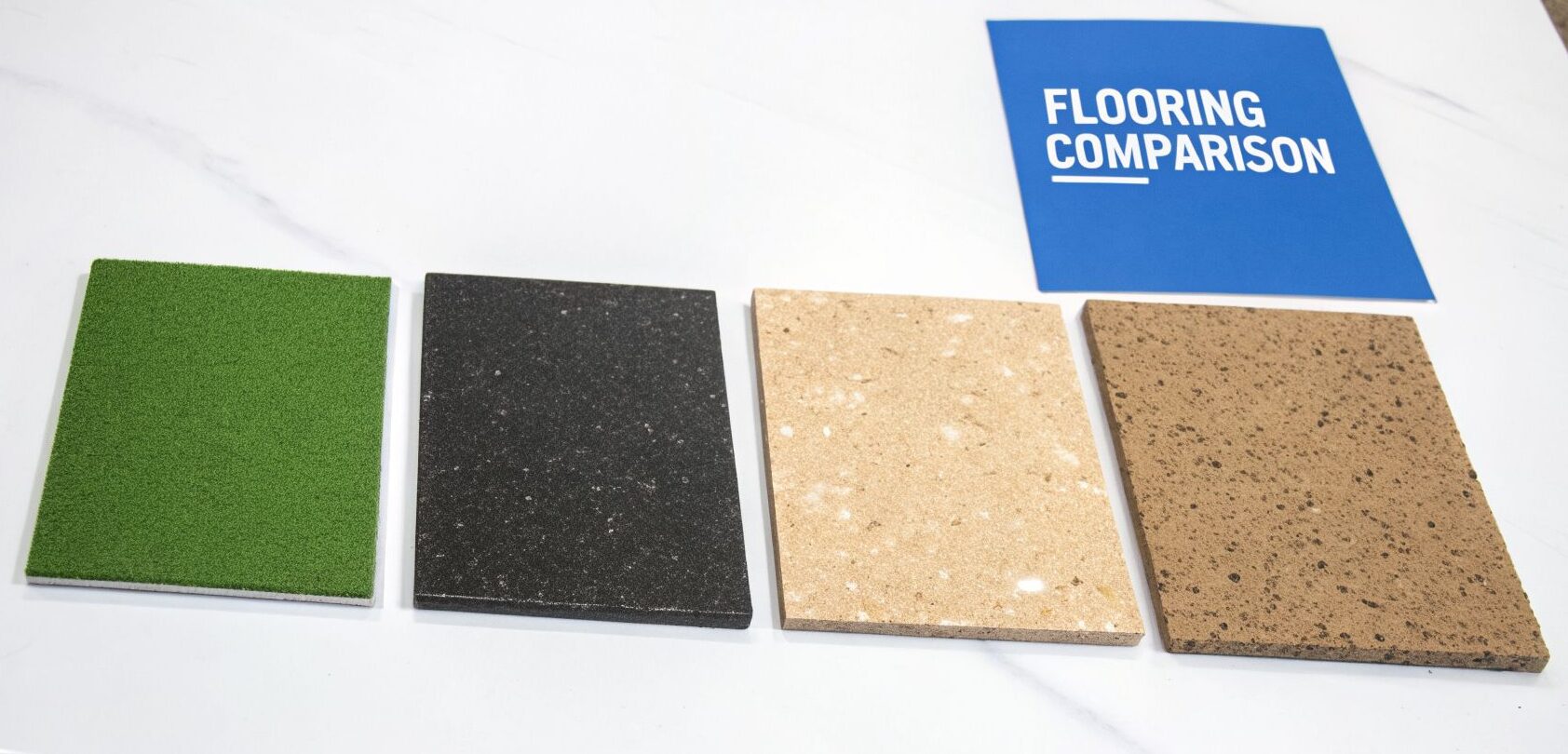
When you’re looking for a floor that can stand up to serious wear and tear, you’ll find plenty of options. But for a busy garage, a bustling commercial space, or a demanding industrial facility, not just any floor will do. Let’s cut through the noise and compare the real-world performance of the top three contenders: Epoxy/Polyaspartic Coatings, Polished Concrete, and Luxury Vinyl Tile (LVT).
We’re going beyond simple feature lists to see how these floors actually hold up. A floor’s true value is measured in its ability to resist abrasion, impacts, moisture, and UV damage over years of use. This is where a professionally installed resinous coating system truly separates itself from the pack.

Hybrid Epoxy and Polyaspartic Coating Systems
From my experience, the absolute gold standard for floor protection is a hybrid system that combines an epoxy basecoat with a polyaspartic topcoat. Think of it not as a single product, but as a multi-layered shield engineered for a specific job.
It all starts with a 100% solids epoxy basecoat. We don’t skimp on our materials; we apply this layer thick, allowing it to level out minor imperfections. More importantly, its slower cure time gives it a chance to seep deep into the concrete’s pores, creating an incredible mechanical bond that also acts as a powerful moisture barrier.
Then comes the finisher: a polyaspartic topcoat. This is where the advanced chemical advantages shine. Polyaspartic chemistry gives you what epoxy can’t—total UV stability. It will not yellow or fade, even in a sun-drenched showroom or a garage with the door open all weekend. It also cures incredibly fast and provides a harder, more scratch-resistant surface.
The hybrid system isn’t a compromise; it’s a strategy. You’re getting the thick, moisture-blocking muscle of epoxy with the UV-proof, chemical-resistant, and quick-curing finish of a polyaspartic. It’s the best of both worlds, offering unparalleled long-term protection.
This combination creates a seamless, non-porous surface with immense strength. A quality epoxy system can have a compressive strength of over 12,000 psi, easily handling heavy tool chests or vehicle traffic that would crush lesser floors. Plus, decorative flake or quartz systems can be installed to achieve an anti-slip coefficient above 0.8, a critical safety feature.
Polished Concrete
Polished concrete has a sleek, industrial look that’s become popular in retail and modern homes. The process involves grinding down the existing concrete slab to a smooth, glossy finish and hardening it with a chemical densifier.
The biggest plus is that the floor is the concrete, so it handles heavy foot traffic and rolling loads with ease. The problem, however, is porosity. Without a sealed topcoat, polished concrete is like a sponge for oils, chemicals, and even spilled drinks, which can lead to permanent stains. It also offers zero protection against heavy impacts that can chip or spall the concrete itself.
Luxury Vinyl Tile (LVT)
Luxury Vinyl Tile (LVT) has exploded in popularity because it looks great and feels comfortable to walk on. It does a fantastic job of mimicking natural wood or stone and holds up well against water, making it a decent choice for some offices or homes.
But LVT’s weakness is in its construction. It’s a system of individual planks or tiles, which means it has seams. No matter how tight the fit, those seams are weak points that can trap grime and moisture, creating headaches down the road. While the top wear layer is tough, it can still be gouged by a dropped tool or torn by dragging heavy equipment, and it does nothing to protect the subfloor from impact damage. If you’re weighing your options against a seamless system, our complete guide on the types of epoxy floor coatings explained can offer more clarity.
Performance Snapshot of High Traffic Flooring Options
To make your decision easier, this table breaks down the key performance metrics for each flooring type. It’s a quick way to see how they stack up in the areas that matter most for a high-traffic environment.
| Flooring Type | Durability & Lifespan | Installation Time | UV Resistance | Maintenance Level | Best For |
|---|---|---|---|---|---|
| Hybrid Epoxy/Polyaspartic | Excellent (15-20+ years) | 1-2 Days + Cure | Excellent (with polyaspartic topcoat) | Very Low | Garages, Warehouses, Showrooms, Restaurants |
| Polished Concrete | Good (10-20 years) | 3-5 Days | Excellent | Low (but stains easily) | Retail, Lobbies, Modern Homes |
| Luxury Vinyl Tile (LVT) | Fair to Good (5-15 years) | 1-3 Days | Good | Low | Residential, Light Commercial, Offices |
Ultimately, the right choice depends on balancing your specific needs for durability, aesthetics, and long-term maintenance. For environments where failure isn’t an option, a hybrid coating system consistently delivers the best return on investment.
Why Expert Surface Preparation Is Non-Negotiable
It’s easy to get caught up in the exciting parts of a new floor—the color, the flake patterns, the final shine. But I’ve learned from years in this business that the most beautiful topcoat in the world is worthless if it doesn’t last. The single factor that separates a floor that looks great for decades from one that peels in months is the prep work. It’s not the glamorous part, but it’s the absolute foundation of a sound investment.
A new coating can’t just be slapped onto old concrete. DIY kits often recommend acid etching, but that’s a shortcut to failure. It barely scuffs the surface, creating a weak bond that’s prone to peeling. This is where our Pristine Process completely changes the game by focusing on what really matters: creating a permanent bond from the ground up.

Creating an Unbreakable Mechanical Bond
To get that lifelong bond, we bring in powerful, industrial diamond grinders with integrated HEPA vacuum systems. This isn’t just about cleaning the floor. We are mechanically grinding off the weak, porous top layer of concrete, called laitance.
This process gives us the perfect Concrete Surface Profile (CSP) of 2-3. Think of it like sanding wood before you paint it. By opening up the concrete’s pores, we create a textured, high-grip surface. Our 100% solids epoxy basecoat can then sink in and grab hold, forming an unbreakable mechanical bond that simply won’t peel or delaminate.
You can’t stick a new coating to a failing surface. Proper grinding removes old, failed paints, sealers, oils, and other contaminants that would otherwise compromise the bond and lead to catastrophic failure down the line.
Repairing the Foundation Before Building
What if your concrete is already damaged? Homeowners often see cracks and spalling and think their floor is too far gone. It’s actually the opposite. Our process doesn’t just hide flaws—it eliminates them for good.
Before a single drop of coating goes down, we hunt down and fix every imperfection.
- Crack Repair: We use a diamond blade to chase out cracks, creating a clean channel. We then fill it with a high-strength polymer that cures to be even stronger than the original concrete.
- Spall and Pit Repair: We grind down any pitted or flaking areas and fill them, creating a perfectly smooth and level foundation for the new floor.
This isn’t just patching. It’s about creating a single, seamless, monolithic surface. Your new floor will not only look flawless, but old damage will never have a chance to show through. That structural integrity is essential for any high-traffic area, whether it’s a family garage or a busy commercial warehouse.
A Homeowner’s Concrete Evaluation Checklist
Wondering what condition your concrete is in? Here’s a quick way to assess your surface before starting any flooring project.
- Check for Moisture: Tape a 2’x2′ plastic square to your floor, sealing all four sides. Leave it for 24 hours. If you see condensation on the plastic when you pull it up, you have a moisture issue that requires a special vapor-blocking basecoat.
- Identify Previous Coatings: Do you see any peeling paint or old, flaky sealers? These have to be completely ground away before a new system can stick.
- Inspect for Damage: Look closely for any visible cracks, divots, or spots where the concrete is crumbling (spalling). These problems need professional repair to guarantee a durable, seamless finish.
By making this level of prep our top priority, we ensure your investment is more than just cosmetic. It’s a structural upgrade that delivers real durability and protection for years to come.
Where These Floors Shine: Real-World Applications
We’ve covered the technical specs, but let’s get practical. The true measure of a flooring system isn’t found on a data sheet—it’s how it performs under pressure in the real world. Seeing where these floors solve day-to-day problems is what really matters.
Let’s walk through a few common scenarios where our resinous floors make a tangible difference.
The Upgraded Residential Garage
Think about your garage. It’s not just a place to park the car anymore, is it? For many of us, it’s a workshop, a home gym, a storage hub, and a main point of entry. Plain, unprotected concrete just wasn’t designed for that kind of life, which is why it inevitably stains, cracks, and kicks up dust.
This is exactly where a full-flake polyaspartic system completely changes the game. It’s built from the ground up to solve the most common garage headaches:
- No more peeling from hot tires. The system creates an unbreakable chemical bond with the concrete. That means the heat and weight of your tires won’t cause the coating to lift or delaminate—a common failure point for DIY kits.
- Spills are no longer a disaster. Oil, gas, antifreeze, and other chemicals can’t penetrate the non-porous surface. They simply pool on top, waiting to be wiped away without leaving a permanent stain.
- It becomes a genuine part of your home. A finished flake floor doesn’t just look good; it reflects light, brightens the entire space, and makes the garage feel like a clean, valuable extension of your living area, significantly increasing property value.
The High-Demand Commercial Space
Now, picture a busy restaurant kitchen, a sleek car showroom, or a veterinary clinic. In places like these, the floor is about much more than just looking good. It’s a critical part of safety, branding, and daily operations. The demands are relentless, and there’s no room for failure.
A seamless resinous floor isn’t just a surface to walk on; it’s an operational asset. It should actively support your business by being safe, tough, and easy to clean—not create more work with constant repairs.
A decorative quartz or custom solid color system delivers on multiple fronts. In areas prone to spills, the integrated texture provides crucial slip resistance, protecting both your team and your customers. We can even use custom color blends to match your branding or create designated walkways.
But the biggest win for many businesses is the seamless, grout-free surface. It eliminates the number one hiding spot for bacteria and grime, which dramatically simplifies cleaning protocols. In fact, professional systems can cut cleaning time in greasy environments by as much as 75% compared to traditional tile. The market for this type of flooring is huge, with North America leading at USD 43.49 billion in 2024, driven by businesses that can’t afford downtime. An epoxy floor can also withstand up to 50,000 psi of tensile force, preventing cracks from impacts that would decimate other surfaces. You can read the full research on the resilient flooring market for more details.
The Unforgiving Industrial Warehouse
In an industrial setting, the floor is part of the machinery. It has to endure non-stop punishment from heavy equipment, forklift traffic, and exposure to some seriously harsh chemicals.
Our industrial-grade systems are engineered for exactly this kind of abuse. It all starts with aggressive surface preparation, followed by thick, 100% solids epoxy base coats. This creates a monolithic surface that resists compression and impact, easily handling the daily grind of loaded pallet jacks and forklifts without chipping or spalling.
We can also build safety directly into the floor itself. By embedding custom-colored line striping for pedestrian walkways or hazard zones under the final clear topcoat, we create markings that will never wear off. No more repainting faded lines—the safety features last as long as the floor does. While these heavy-duty systems are built for durability, if a high-gloss, reflective finish is your main priority, you might also find our guide on commercial concrete polishing useful.
Making the Right Call: Your High-Traffic Flooring Checklist
Choosing the right floor for a demanding space isn’t just about picking a color. It’s about matching the system to your real-world needs. Before you get too far into the weeds comparing products, take a moment to walk through this quick evaluation. It will help you—and your installer—pinpoint the perfect solution that will last for years.
Step 1: Start with the Concrete Itself
Any great floor coating is only as good as the concrete slab underneath. A few minutes of inspection can tell you a lot about what’s needed for proper surface preparation, which is the most critical phase of any professional installation.
-
Look for Moisture: Remember that plastic sheet test? If you tape a square of plastic to your floor and find condensation underneath a day later, you’ve got a moisture issue. This is a red flag that requires a special moisture-mitigating epoxy primer to prevent the new floor from peeling or bubbling.
-
Identify Cracks and Damage: Scan the surface for any cracks, from tiny hairline fractures to more significant structural breaks. A pro will need to “chase” these out with a grinder and fill them to create a solid, seamless foundation.
-
Check for Old, Failing Coatings: Is there any paint flaking off or a sealer that’s peeling away? Every last bit of that old material has to go. Complete removal with diamond grinding is the only way to guarantee the new coating can form a permanent mechanical bond with the concrete.
This flowchart breaks down how different environments—like a garage, a commercial kitchen, or a busy warehouse—call for different solutions.

As you can see, while durability is a given, specific factors like UV light, chemical spills, and slip resistance really drive the decision.
Step 2: Define Your Performance Demands
Next, get honest about the day-to-day abuse your floor will endure. This is where you’ll start to see the key differences between materials like epoxy and polyaspartic and decide what’s truly necessary for your space.
-
Traffic Levels: Just how busy is it? An occasional car and some foot traffic is one thing. Constant forklift activity, heavy carts, and hundreds of daily footsteps demand a thicker, industrial-grade system built for punishment.
-
Chemical Spills: Will the floor see its share of motor oil, harsh cleaning agents, or other corrosive liquids? If the answer is yes, a seamless, non-porous surface isn’t a luxury—it’s essential for preventing stains and concrete damage.
-
Sunlight Exposure: Is the floor right next to a big garage door or large windows that let in a lot of natural light? To stop the floor from yellowing or breaking down over time, a 100% UV-stable polyaspartic topcoat is the only way to go.
Maintenance Tip: The secret to keeping these floors looking brand new is simple. A microfiber dust mop handles daily dirt and dust perfectly. For a deeper clean, all you need is a pH-neutral cleaner and water. Just stay away from harsh soaps or abrasive scrubbing pads, as they can dull the finish.
Walking through this checklist helps you think beyond just looks and focus on what makes for the best flooring for high traffic areas. While this is a great starting point, understanding the details that influence polyaspartic floor coating cost will give you a complete picture of the investment. From here, a professional consultation is the best way to get a final recommendation tailored specifically to your slab and your needs.
Your High-Performance Flooring Questions, Answered
It’s completely normal to have a few practical questions before committing to a new flooring system. We hear them all the time. Getting straight, honest answers is the only way to feel confident you’re making the right investment for your space. Let’s tackle some of the most common ones we get from our clients.
How long does it take?
We know downtime is a major concern, whether it’s your home garage or a commercial facility. Thanks to the chemical advantages of polyaspartic coatings, our Pristine Process is designed for a rapid 1-day installation for most residential projects.
Day one involves the complete process: meticulous surface preparation via diamond grinding, expert repair of any cracks or damage, application of the thick epoxy basecoat and decorative flakes, and finishing with the crystal-clear, UV-stable polyaspartic topcoat. The floor is ready for light foot traffic in just a few hours, and we recommend waiting 48-72 hours before driving on it. This allows the system to fully cure, locking in the rock-solid durability that defines the Pristine standard of quality.
Can it be applied to damaged concrete?
Yes, absolutely. Properly repairing existing concrete damage is a fundamental part of a professional installation. We don’t just hide problems—we solve them permanently. Our Pristine Process starts with industrial-grade grinders to strip away old, failing coatings and create a fresh surface.
From there, we address every crack, pit, and spalled area using a high-strength polymer filler. This material doesn’t just patch the hole; it forms a chemical bond with the concrete, creating a repair that’s often stronger than the original slab itself. This guarantees your new floor has a perfectly smooth, monolithic foundation, ensuring old issues won’t reappear down the road.
Maintenance Tip: The secret to keeping your floor looking brand new is incredibly simple. For daily cleaning, a microfiber dust mop is perfect. For a deeper clean, just use a standard mop with a pH-neutral cleaner. The key is to avoid soap-based products that can leave a dull film, and never use abrasive scrubbing pads.
What is the maintenance like?
This is where you’ll really appreciate the investment. A professionally installed resinous floor is exceptionally low-maintenance and easy to clean. Because the surface is seamless and non-porous, things like dirt, oil, and grime can’t soak in and cause stains. Spills that would be a permanent mark on bare concrete just wipe right off.
There’s no need for the constant waxing, buffing, or special treatments that other types of flooring demand. This simplicity adds up to significant savings in time, effort, and money over the life of the floor—a huge practical benefit for busy homeowners and an absolute game-changer for commercial facility managers.
Ready to transform your high-traffic space into a durable, easy-to-clean, and valuable asset? The team at Pristine Epoxy Floor Coatings is here to provide an honest, expert assessment of your concrete and recommend the perfect system for your needs.